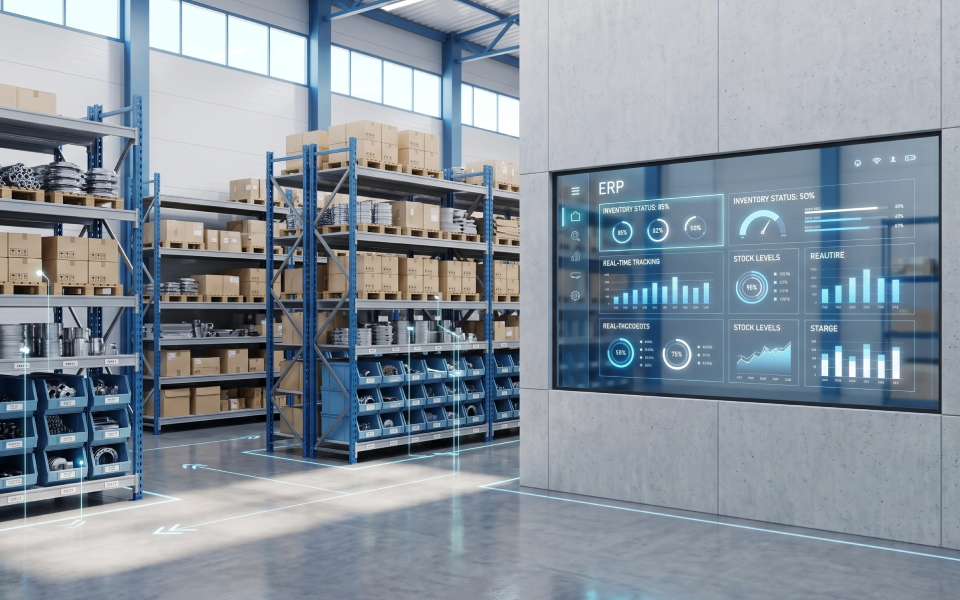
When the company grows, managing inventory becomes more difficult. Companies need a platform for handling multiple warehouses, monitor stock levels, manage purchases and for record sales. While these activities are managed through spreadsheets or separate systems, inventory information takes time and increases the errors. An advanced ERP system controls all business processes and their activities in one platform. It helps businesses connect inventory with purchasing, sales, accounting and it provides up to date information. In this blog we will explain how an ERP system helps inventory management.
What Is Inventory Management?
Before knowing about how an ERP system helps inventory management, you should understand what inventory management is. It is the process of purchasing, storing, tracking and controlling the products keeps in stock. It helps businesses to understand how stocks are available, where they are located, how much has been used and how many stocks needed for the organisation. An inventory management maintains the right stock level, reduces excess inventory, avoids shortages, tracks items, monitors product movement, improves purchase and reduces inventory errors.
How Does an ERP System Help in Inventory Management?
Centralizes Inventory Information
One of the main benefits of using ERP is having inventory information in one place. It maintains accurate product details, stock quantities, warehouse information, purchase records, sales transactions and stock movement. This helps to reduce duplicate data entry and makes it easy to use.
Provides Real Time Stock Visibility
Understanding the current stock level is important for purchasing and sales. An Enterprise Resource Planning software updates all the inventory purchase, sale and transfer. This provides better visibility for business ion inventory level and understand which products are available or stock out.
Prevent Stock Shortages
Stock shortage affects sales and customer satisfaction. But keeping too many stocks increases storage cost. An ERP solution helps to monitor stock levels and identify which items are not in stock or not. This is useful for companies managing different products.
Supports Purchase Management
Inventory and purchasing are closely connected. An ERP software connects inventory information with purchasing activities. Through this, employees can understand the current stock, last purchases, supplier information and track purchase orders. This makes purchasing easy and more organised.
Tracks Inventory Across Multiple Locations
Managing multiple warehouses or branches face so many inventory issues, they need to understand the products are located. An ERP system helps to check available quantities at different locations and it records the stock transfer locations. This helps employees to track the inventory products from different locations.
Improves Inventory Accuracy
Inventory records contain errors due to incorrect data entry and missed updates. By connecting inventory transactions with the ERP system, it reduces the manual data entry in purchasing, sales and other activities. This identifies the inventory differences and makes adjustments.
Connects Inventory With Accounting
Inventory has a direct link with business finance, purchase, sales, and stock values. By using inventory with accounting software, financial and inventory information work together. This provides better visibility in inventory related cost and it helps accounts teams to record financial transactions.
Supports Inventory Reporting
Reporting is an important part in inventory and it understands how inventory is performing. An ERP system helps to track reports based on stock levels, product movement, purchases, sales activities. The inventory reports include current stock reports, purchase resorts, low stock reports, product wise stock reports and more. These reports help managers to identify trends.
Reduces Manual Work
Inventory involves many tasks, such as product information, updating quantities, checking purchase records, preparing reports and many activities. Advanced ERP software manages all these activities in one platform and it is very useful for employees. This reduces administration work load and makes better decisions.
Improves Coordination Between Departments
Inventory management includes different departments such as purchasing, sales, warehouse and finance. When every department maintains separate works and records, it will be confusing for employees and the information does not match. An ERP solution provides a shared platform for employees and it can access relevant information. This improves team coordination and misunderstanding with employees.
What Should Businesses Consider When Choosing an ERP Solution?
When you are selecting the right ERP software, you should understand what your business needs. Before making a better decision, businesses should understand the following factors:
- Inventory Tracking Capabilities
Choose a software which tracks stock quantities, availability and their movements.
- Multi-Warehouse Support
Select the software which manages inventory access from different locations or warehouses.
- Purchase and Sales Integration
Connect purchasing and sales activities with inventory updates.
- Stock Transfer Management
Record and manage stock transfers between locations.
- Reporting and Dashboards
Select the software that provides clear reports and dashboards to make better decisions.
- Accounting Integration
Choose the software which connects inventory transactions with financial records.
- User-Friendly Interface
Choose software with a simple and easy-to-use interface.
- Scalability
Choose a solution that can support your inventory facilities and future operational requirements.
- User Access Controls
Control access to inventory information based on user roles.
- Integration With Other Business Systems
Select the software which integrates with other businesses.
Who Can Benefit from ERP-Based Inventory Management?
- Retail Businesses
- Manufacturing Companies
- Wholesale Businesses
- Distribution Companies
- E-commerce Businesses
- Construction Companies
- Food and Beverage Businesses
- Businesses With Multiple Locations
Why EQUAL ERP Software
EQUAL ERP software is designed to modernize and simplify every business operation through a centralized platform. It brings every inventory, purchasing, sales, accounting, HR and other business process together. The platform also supports businesses in improving coordination between different departments. If your business is looking for an ERP software, EQUAL ERP provides businesses with the tools to organize inventory and other core operations within one integrated platform. It will be great decision making for your organisation and future requirements. So make a good decision for your business.
FAQs
What is inventory management?
Ans: It is the process of purchasing, storing, tracking and controlling the products keeps in stock.
Is ERP software suitable for growing businesses?
Ans: Yes, it supports business when they add more products, suppliers, employees and transactions.
How does ERP improve coordination between departments?
Ans: It provides a shared platform for different departments to access relevant information without different records. It reduces misunderstanding between departments and employees.
What is the difference between ERP software and inventory Management?
Ans: Inventory focus on stock related activities, while ERP software connects inventory with other business functions and activities.
How does ERP help prevent stock shortages?
Ans: It monitors all the stock levels and identifies the products that are not available. It helps employees to maintain stocks.